
Trading Education
Why Most Retail Traders Lose Money, and How to Avoid the Common Traps
You have probably heard that “90% of traders lose money.” It sounds like a scare line, but regulators who look at real account data keep finding numbers close to it.
The good news: most of the reasons are not about bad luck or a rigged market. They are habits: risking too much, trading too often, ignoring costs and letting emotions take the wheel. Habits can be changed.
In this guide we look at what the data says, break down the nine traps that drain most retail accounts, and give you a practical plan to avoid each one.
What the numbers say
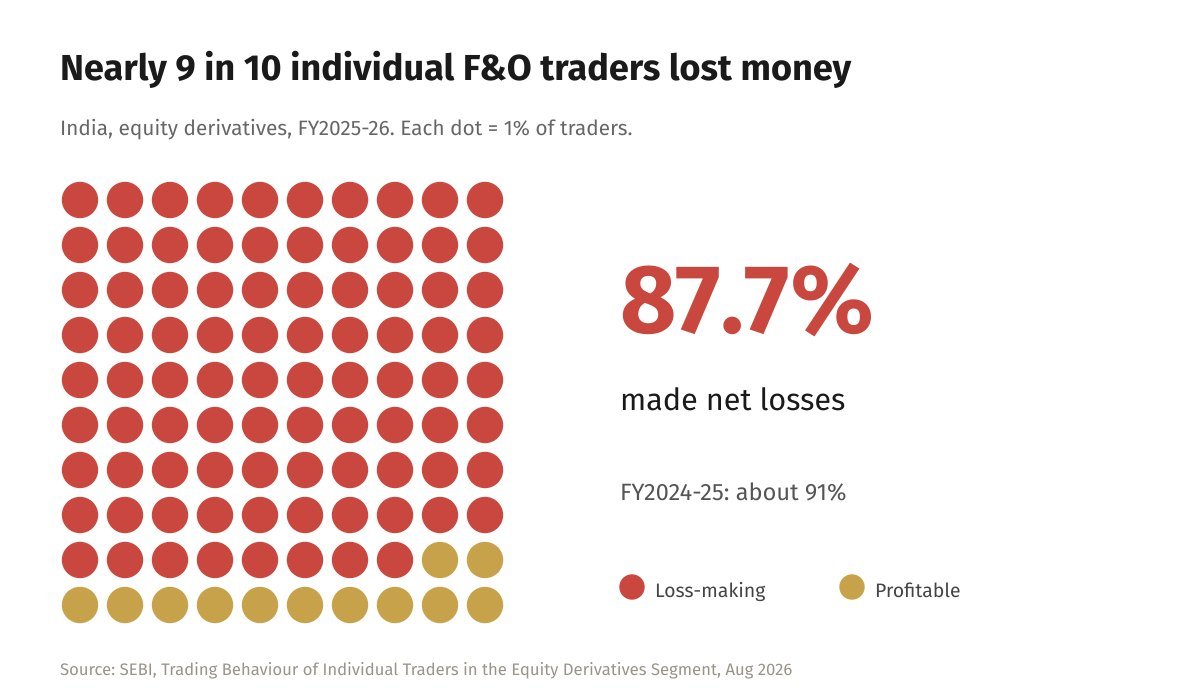
In India, SEBI studied individual traders in equity futures and options. In FY2025-26, 87.7% of individual F&O traders made net losses, after about 91% in FY2024-25.
The pattern is global. When Europe’s securities regulator ESMA restricted CFDs for retail clients, it reported that 74% to 89% of retail CFD accounts typically lose money. That is why brokers in Europe and the UK must show a loss percentage on their websites.
Different markets, different products, same result. That consistency tells us the problem is less about what people trade and more about how they trade.
The 9 traps that drain retail accounts
Most losing accounts fall into several of these at once. Each trap comes with a practical fix.
Trading without a plan or an edge
Many traders enter because a chart “looks good” or someone on social media is buying. Without written rules for entry, exit and size, every trade is a fresh guess, and guesses lose to costs over time.
The fix
Write a one-page trading plan: which markets, which setup, when you enter, where the stop goes, when you exit. If you can’t write it down, you don’t have a strategy yet.
No stop loss, or moving it
“It will come back” is the most expensive sentence in trading. Without a stop, one bad trade can wipe out weeks of gains. Moving the stop further away turns a small planned loss into a large unplanned one.
The fix
Place the stop loss at the same moment you open the trade, and never widen it. Only move it to lock in profit.
Risking too much on each trade
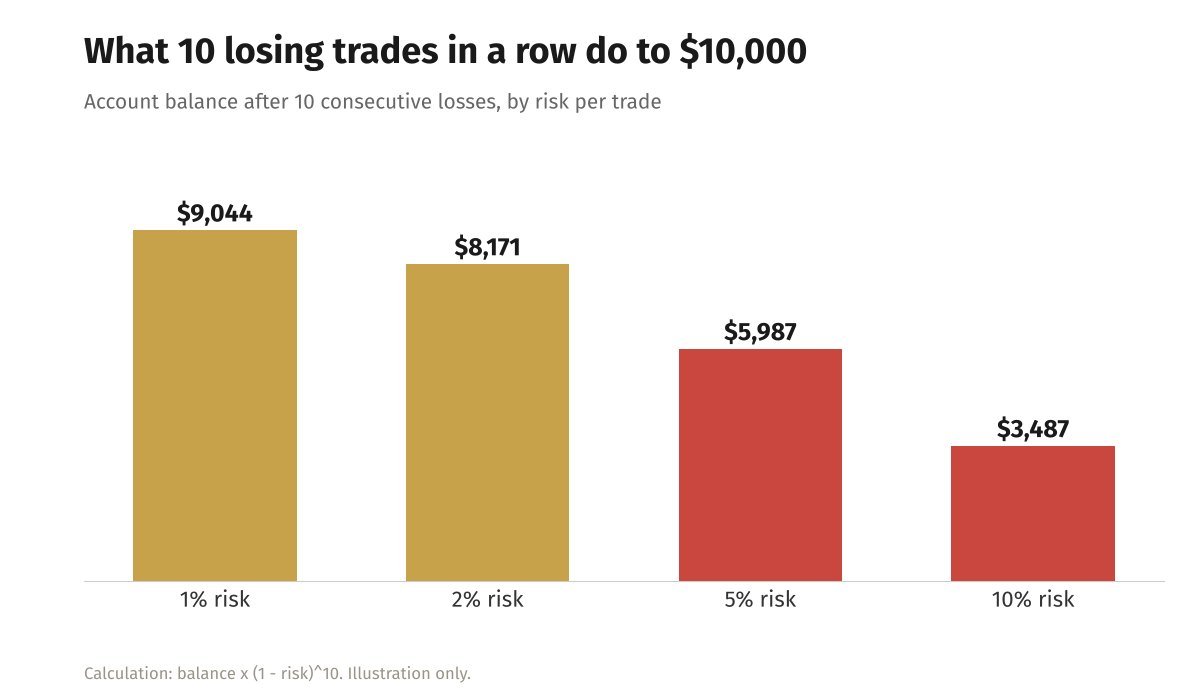
Big positions feel exciting until a normal losing streak arrives. At 10% risk per trade, ten losses in a row cut an account by about 65%. At 1% risk, the same streak costs under 10%.
The fix
Cap risk at 1-2% of your account per trade. Size every position from your stop-loss distance, not from how confident you feel.
Overtrading
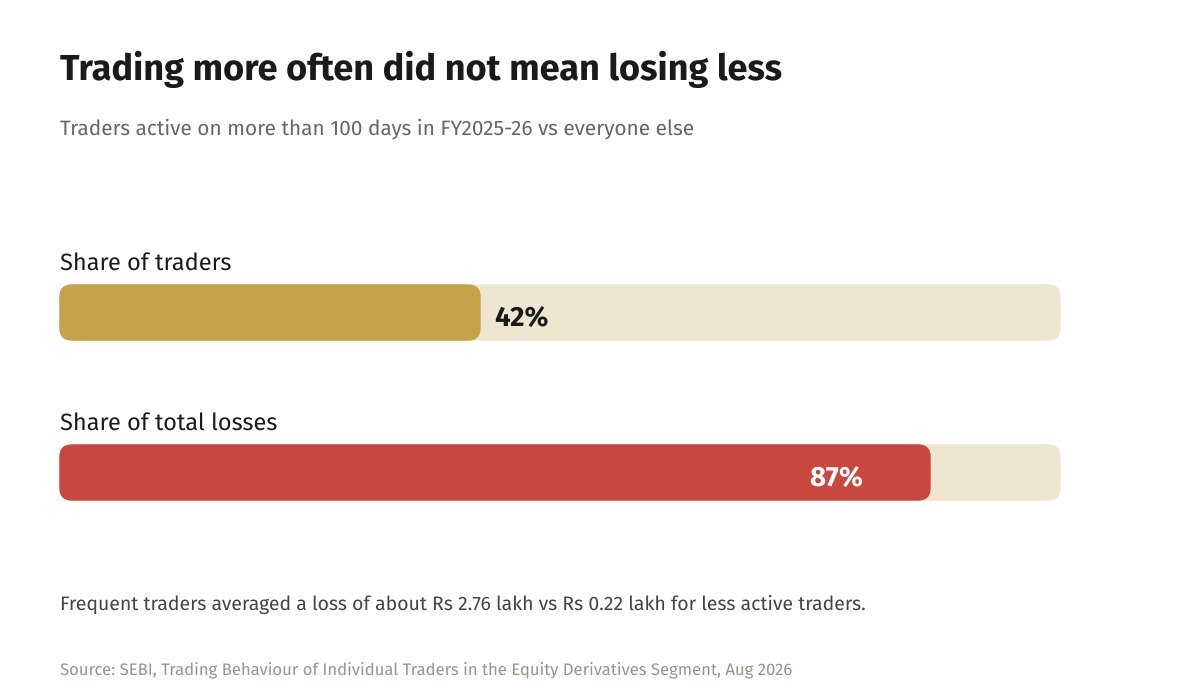
More trades mean more spreads and commissions, and more decisions made while tired or bored. SEBI found that traders active on more than 100 days were 42% of traders but carried 87% of total losses.
The fix
Trade only your defined setups. Set a daily or weekly trade limit, and treat “no trade” as a valid decision.
Letting emotions drive decisions
Fear closes winners early. Hope holds losers too long. FOMO chases moves that already happened. After a loss, revenge trading doubles the size to “win it back”, usually ending in a bigger loss.
The fix
Stop trading for the day after a set number of losses. Step away from the screen after a big loss, and follow your written rules, not your mood.
Ignoring trading costs
Spreads, commissions, overnight swaps and slippage look tiny per trade. Across hundreds of trades they decide whether a strategy wins or loses.
The fix
Know your all-in cost per trade before you start. Prefer liquid markets and trading hours with tight spreads, and factor costs into every backtest.
Unrealistic expectations
Screenshots of huge gains set the bar at “double my account this month”. Chasing that target leads straight to oversized positions and reckless risk.
The fix
Judge yourself on process and risk control first. Professional funds are pleased with steady, modest returns and controlled drawdowns.
Following tips and unverified gurus
Paid tips, Telegram calls and “guaranteed” signals rarely show verified long-term results. You also learn nothing about why a trade was taken.
The fix
Only trust track records verified by a third party over many months, including the losing periods. Anyone promising guaranteed returns is a red flag.
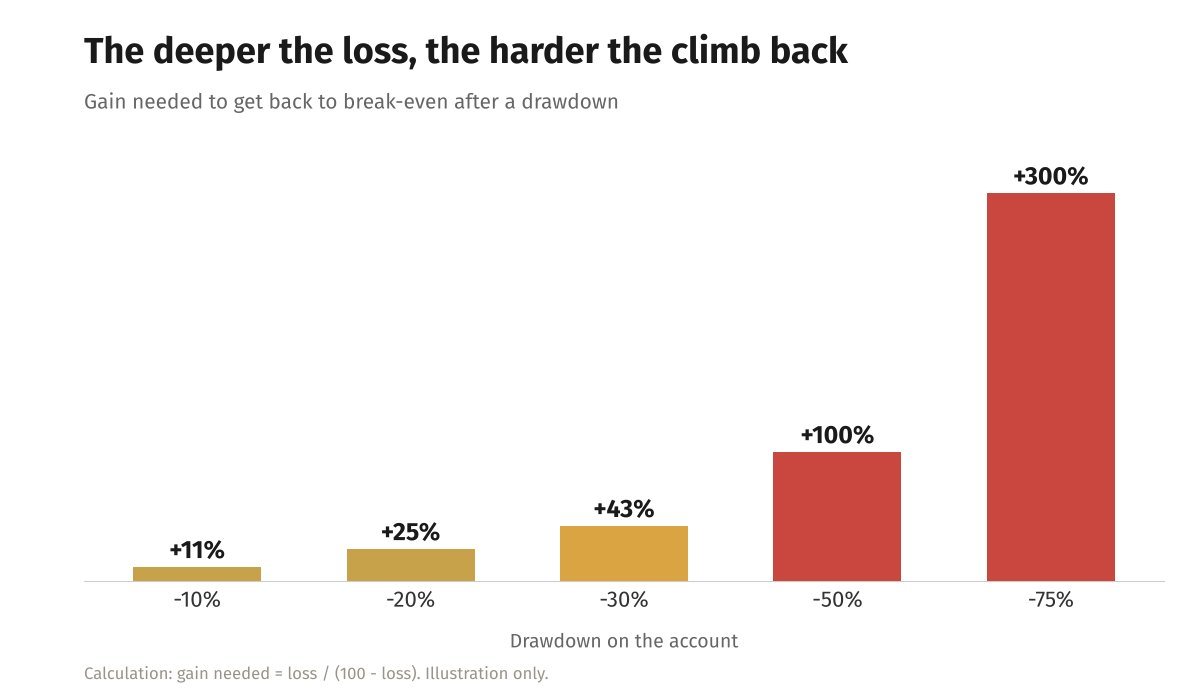
Underestimating drawdown math
Losses and gains are not symmetrical. Lose 50% and you need a 100% gain just to get back to where you started. Deep drawdowns are very hard to recover from.
The fix
Protect capital first. Set a maximum drawdown limit for your account, and cut size or pause trading when you reach it.
How to avoid the traps: an 8-step plan
Write your trading plan
Markets, setups, entry and exit rules, and position size, on one page.
Risk 1-2% per trade, maximum
Calculate lot size from your stop distance every time.
Set the stop loss at entry
Never widen it. Only move it to protect profit.
Limit how often you trade
A maximum number of trades per day or week stops boredom trades.
Keep a trading journal
Record every trade with the reason, result and emotion. Review it weekly.
Know your costs
Spread, commission and swap per trade, built into every decision.
Practise first, then start small
Demo trade, then go live with small size until your results are consistent.
Set realistic goals and a drawdown limit
Aim for steady progress, and pause when your maximum drawdown is reached.
Where automation helps, and where it doesn’t
Rule-based trading software (an Expert Advisor, or EA) is a tool for discipline, not a shortcut to profit. Be clear about what it can and can’t fix.
What automation can fix
- Emotional decisions: an EA doesn’t revenge trade or panic
- Inconsistent risk: the same lot size and stop loss rules every trade
- Moved stop losses: the rules stay as written
- Missed sessions and fatigue: it can run 24 hours on a VPS
What automation can’t fix
- A strategy with no edge: automating it just loses faster
- Market risk: every EA has losing trades and losing months
- Bad settings: risking too much per trade is still possible
- Neglect: it still needs regular monitoring and review
Weighing up both approaches? Read our comparison: Manual Trading vs Automated Trading: Pros, Cons and Who Each Suits.
Self-check: are you making these mistakes?
Answer honestly. Each yes is a trap to fix.
- Do I sometimes trade without a written reason for entry and exit?
- Have I ever risked more than 2% of my account on one trade?
- Have I moved a stop loss further away to avoid taking a loss?
- Do I open trades because I am bored, or to win back a loss?
- Do I not know my all-in cost per trade?
- Have I copied a tip without checking a verified track record?
- Do I have no maximum drawdown at which I stop and review?
What your score means
0-1 yes answers
You have solid habits. Keep journaling and reviewing so they stay that way.
2-4 yes answers
You are exposed to the traps that sink most accounts. Fix one habit at a time, starting with risk per trade and stop losses.
5 or more yes answers
Pause live trading. Write a plan, go back to a demo or very small size, and rebuild your process before risking more capital.
Frequently asked questions
Is it true that 90% of traders lose money?
Close to it, in the data regulators have published. SEBI found 87.7% of individual F&O traders in India made net losses in FY2025-26, and ESMA reported that 74-89% of retail CFD accounts typically lose money. The exact figure varies by market, product and year.
What is the main reason traders lose money?
There is rarely one reason. The most common combination is oversized risk, no fixed stop loss, overtrading and emotional decisions, made worse by trading costs.
How much should I risk per trade?
Many experienced traders risk 1-2% of their account per trade. That keeps a normal losing streak survivable.
Can a beginner become a profitable trader?
Some do, but it takes time, a written plan, strict risk control and honest review. Start on a demo account or with small size, and expect a long learning period.
Does automated trading stop you from losing money?
No. Automation removes emotional mistakes and enforces your rules, but it does not remove market risk. Any strategy, manual or automated, can lose money.
Is trading the same as gambling?
It can be, if you trade without an edge, a plan or risk limits. With defined rules, controlled risk and verified results, it becomes a business process rather than a bet.
Conclusion: losing is common, but not inevitable
The data is clear that most retail traders lose money. It is just as clear about why: too much risk, too many trades, no stop losses, ignored costs and emotional decisions.
None of those are market secrets. They are habits you control. Write a plan, cap your risk, respect your stop loss, trade less and measure everything. If discipline is your weak point, rule-based automation can help you stick to the plan.
Trade with rules, not emotions
Trade Like Sukrit EAs apply fixed entry, exit and risk rules on gold and Bitcoin, with their logic and verified results shown openly so you can judge them yourself.
Risk disclaimer: Trading forex, gold, cryptocurrencies, CFDs and derivatives involves significant risk and may not be suitable for all investors. You can lose some or all of your capital. Past performance, whether backtested or live, does not guarantee future results. This article is for educational purposes only and is not investment advice. Check that trading these instruments is permitted in your country before you start.